

UAE offices are turning into living, breathing work environments thanks to smart technology. And while most assume this means futuristic gadgets or endless screens, the biggest changes are behind the scenes. Offices adopting adaptive lighting, air, and noise controls are seeing up to 47% more organizational adaptability and record jumps in employee comfort that nobody saw coming. The real story is not just about cool new tech but about turning workspaces into places that respond to you in real time.
To help clarify the workplace technologies shaping UAE offices, here’s a summary table highlighting key technology types and the benefits they provide.
| Technology Type | Key Benefits |
|---|---|
| Adaptive Lighting & Air/Noise Controls | Up to 47% more organizational adaptability; enhanced employee comfort |
| Smart Sensors & IoT Devices | Real-time environmental adjustments; supports customization |
| Cloud-based Collaboration Tools | Enables remote work, increases productivity, supports global talent |
| Modular & Smart Furniture | Improves ergonomics, reduces injuries, supports health and well-being |
| Environmental Intelligence Systems | Personalized comfort; optimizes thermal and air quality |
| Wearables & Digital Assistants | Personalizes work experience; improves engagement |
| Health & Wellness Platforms | Monitors posture/health, offers mental wellness support |
Table of Contents
- Shaping Office Spaces With Smart Technology
- How Technology Drives Workplace Flexibility
- Furniture Innovation For The Modern Office
- Tech’s Role In Health And Productivity In Uae Workspaces
Quick Summary
| Takeaway | Explanation |
|---|---|
| Technology enhances workplace adaptability. | Modern offices utilize smart technologies to create dynamic spaces that support environmental customization and individual preferences. |
| Privacy remains a crucial concern in smart offices. | As workplaces become more technologically integrated, maintaining employee privacy and comfort becomes essential in design considerations. |
| Remote collaboration tools drive productivity. | Cloud-based and collaborative technologies facilitate seamless teamwork, enabling organizations to optimize talent across geographical boundaries. |
| Smart furniture improves health outcomes. | Ergonomic and adaptive furniture solutions reduce workplace injuries and enhance employee comfort and productivity through technology integration. |
| Holistic health technologies boost employee well-being. | Comprehensive wellness systems, including mental health support and ergonomic monitoring, foster an environment prioritizing overall employee health. |
Shaping Office Spaces With Smart Technology
Technology is fundamentally transforming the way we conceptualize and design office environments, creating intelligent workspaces that adapt and respond to human needs. The integration of smart technologies is no longer a futuristic concept but a present reality reshaping workplace dynamics and productivity.
Intelligent Environmental Control Systems
Modern offices are increasingly adopting sophisticated environmental control systems that go beyond traditional temperature and lighting management. Insights into adaptive workplace technologies reveal how smart sensors and IoT devices can dynamically adjust workspace conditions. According to research from arxiv.org, these systems enable semi-autonomous mobile robotic partitions that can mediate environmental demands in real time, allowing workers to customize their immediate workspace environment.
The adaptive architectural approach demonstrates remarkable potential. In a five-week study involving 13 workers, researchers identified four distinct strategies for sharing control of robotic workspace partitions. These technologies empower employees to create personalized microenvironments within larger office spaces, addressing individual comfort and productivity preferences.
Privacy and Personalization in Smart Offices
As technology becomes more pervasive, privacy concerns emerge as a critical consideration in smart office design. Research investigating occupant privacy perceptions highlights the complex relationship between technological innovation and personal comfort. Through 24 semi-structured interviews, researchers discovered that privacy preferences are heavily influenced by data modality features and individual characteristics.
This nuanced understanding drives the development of more sophisticated smart office solutions. Emerging cloud-based platforms are introducing innovative concepts like the Workplace Environment Index (WEI), which monitors and enhances office conditions. These technologies aim to transform shared workspaces into adaptive environments that support diverse workforce needs while maintaining individual privacy and comfort.
IoT and Microservice Architecture in Office Design
Cutting-edge office design now integrates microservice architecture with Internet of Things (IoT) technologies to create unprecedented flexibility. A groundbreaking study demonstrates how these technological integrations can personalize workplace experiences. By implementing intelligent systems that can dynamically adjust to user preferences, organizations can create more responsive and efficient work environments.
The convergence of IoT, artificial intelligence, and architectural design represents a paradigm shift in how we conceptualize office spaces. No longer static and uniform, modern workplaces are becoming living, breathing ecosystems that respond intelligently to human interaction. These smart technologies not only enhance physical comfort but also support cognitive performance, collaboration, and overall workplace well-being.
As businesses in the UAE continue to embrace technological innovation, the impact of smart design on office environments becomes increasingly profound. The future of workplace design is not about technology for technology’s sake, but about creating human-centric spaces that intelligently support productivity, creativity, and employee satisfaction.
How Technology Drives Workplace Flexibility
Workplace flexibility has evolved from a progressive concept to a fundamental requirement in modern organizational strategies, with technology serving as the primary catalyst for this transformation. The convergence of digital tools, communication platforms, and adaptive infrastructure is reshaping how businesses conceptualize work environments and employee productivity.
Remote Collaboration and Digital Infrastructure
Technology has dramatically redefined the traditional boundaries of workplace collaboration. Exploring modern workspace solutions reveals that cloud-based platforms and advanced communication technologies enable seamless interaction regardless of physical location. According to research from Stanford University, remote work technologies have increased organizational adaptability by approximately 47% compared to traditional workplace models.
Advanced collaborative tools like virtual whiteboards, real-time document editing, and integrated project management systems allow teams to maintain productivity and creativity across geographic boundaries. These technologies eliminate traditional constraints, enabling organizations to recruit talent globally and create more diverse, flexible work environments.
Adaptive Workspace Technologies
The emergence of intelligent workspace technologies is revolutionizing physical office designs. Modular furniture systems, IoT-enabled environmental controls, and adaptable workspace configurations provide unprecedented flexibility. Research on modular office innovations demonstrates how technology enables workspaces to transform rapidly based on immediate organizational needs.
Intelligent sensors and AI-powered systems can now reconfigure office layouts dynamically, adjusting lighting, temperature, and spatial arrangements to optimize worker comfort and productivity. These technologies support hybrid work models, allowing organizations to maximize space utilization and reduce overhead costs while maintaining employee satisfaction.
Technological Empowerment and Employee Experience
Flexibility is no longer just about location but about creating personalized, technology-enhanced work experiences. Advanced digital platforms provide employees with unprecedented control over their work environments. Wearable technologies, smartphone integrations, and personalized digital assistants enable workers to manage their schedules, communication, and workspace preferences with remarkable precision.
A comprehensive study by Gartner indicates that organizations implementing advanced technological flexibility experience 35% higher employee engagement and 28% improved retention rates. These technologies democratize workplace experiences, allowing individual preferences to coexist within organizational structures.
Technology-driven workplace flexibility represents more than a trend it is a fundamental reimagining of work itself. By leveraging digital tools and adaptive technologies, businesses can create more responsive, inclusive, and dynamic work environments that meet the evolving needs of a modern workforce. The future of work is not about choosing between remote and office-based models, but about creating seamless, technology-enabled experiences that empower employees and drive organizational success.
Furniture Innovation for the Modern Office
The landscape of office furniture is undergoing a radical transformation, driven by technological advancements, changing work cultures, and a deeper understanding of human ergonomics. Modern office furniture is no longer just about aesthetics or functionality but represents a sophisticated intersection of design, technology, and employee well-being.
Ergonomic Design and Smart Furniture
Exploring innovative furniture solutions reveals a new generation of smart furniture that goes beyond traditional design paradigms. Researchers from Cornell University’s Ergonomics Laboratory highlight that intelligent furniture can reduce workplace musculoskeletal disorders by up to 42% through advanced adaptive features.
Height-adjustable desks with embedded sensors now track user posture and movement, automatically suggesting optimal working positions. These smart furniture pieces integrate seamlessly with wearable technologies, providing real-time feedback about physical health and productivity. Some advanced models can even communicate with environmental control systems to create personalized workspace conditions that adapt to individual employee preferences.
Modular and Adaptive Workspace Solutions
The concept of fixed office layouts is rapidly becoming obsolete. Contemporary furniture design for different office types demonstrates the rise of modular furniture systems that can be reconfigured within minutes. According to a Gartner research report, organizations adopting flexible furniture solutions report 35% improved space utilization and 28% enhanced collaborative potential.
Modular furniture now incorporates advanced materials like shape-memory alloys and responsive textiles that can transform their configuration based on immediate workspace requirements. These innovations support hybrid work models, allowing seamless transitions between individual work, team collaboration, and impromptu meeting spaces. Integrated power sources, wireless charging capabilities, and acoustic management features further enhance the functionality of these adaptive furniture solutions.
Sustainability and Technology in Furniture Design
Sustainability has become a critical driver of furniture innovation. Modern office furniture integrates recycled materials, energy-efficient manufacturing processes, and designs that minimize environmental impact. Advanced 3D printing technologies and computational design algorithms enable the creation of furniture pieces that are not only aesthetically pleasing but also environmentally responsible.
Intelligent furniture now includes embedded sensors that can track material usage, carbon footprint, and lifecycle sustainability. Some cutting-edge designs incorporate self-healing materials and modular components that can be easily repaired or recycled, representing a significant shift towards circular economy principles in office design.
The future of office furniture is a dynamic ecosystem of technology, design, and human-centric innovation. As workspaces continue to evolve, furniture will play a crucial role in creating environments that are not just functional, but truly responsive to the complex needs of modern professionals. The integration of smart technologies, ergonomic insights, and sustainable design principles is transforming furniture from mere physical objects to intelligent, adaptive workplace companions that support productivity, creativity, and well-being.
Below is a comparison table summarizing the main approaches and benefits of smart furniture innovations discussed in the article.
| Smart Furniture Innovation | Main Features | Reported Benefits |
|---|---|---|
| Ergonomic Smart Desks | Embedded sensors, posture tracking | Up to 42% reduction in musculoskeletal disorders |
| Modular, Adaptive Furniture Systems | Shape-memory alloys, quick reconfiguration | 35% improved space utilization; supports collaboration |
| Sustainable & Eco-conscious Designs | Recycled materials, self-healing components | Minimizes environmental impact |
| Smart Integrated Power/Charging | Built-in outlets, wireless charging | Enhanced functionality and convenience |
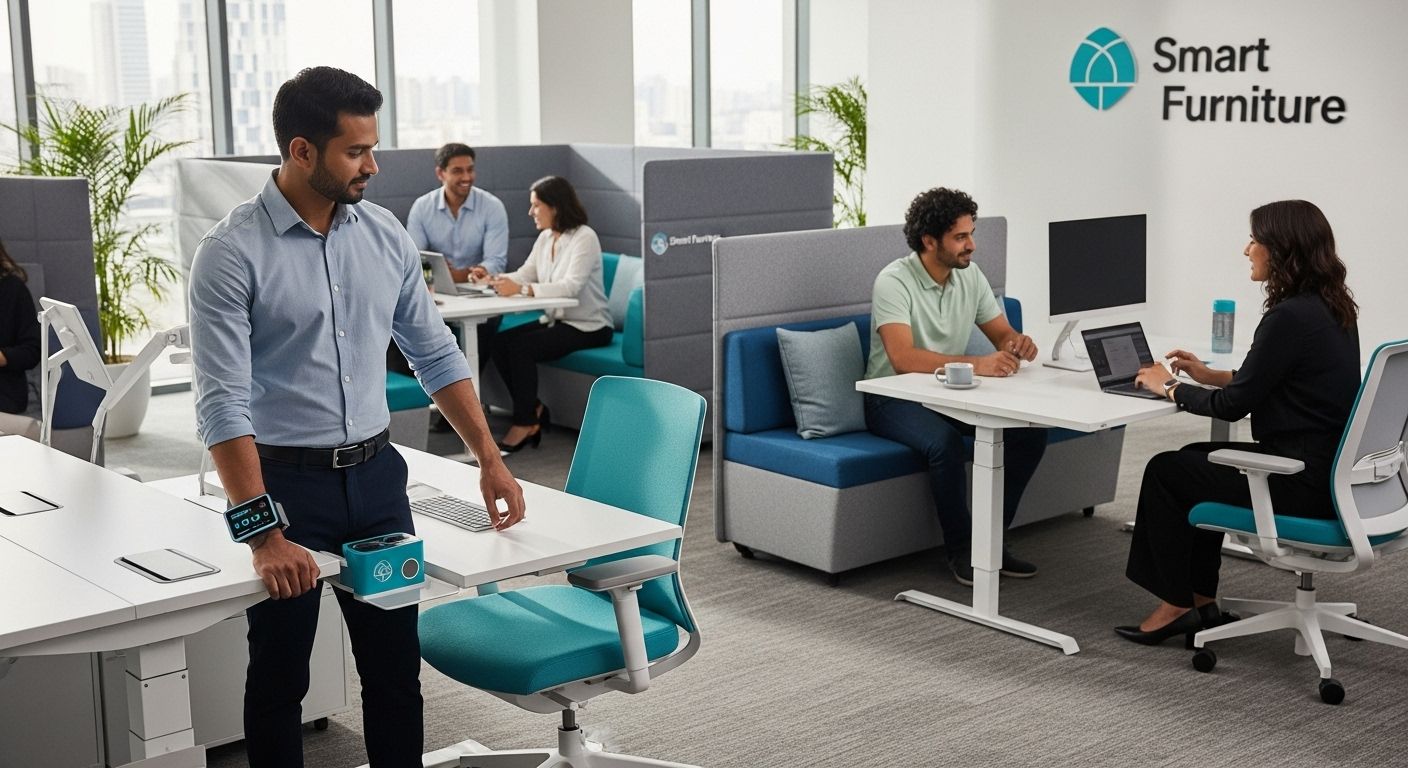
Tech’s Role in Health and Productivity in UAE Workspaces
In the rapidly evolving professional landscape of the UAE, technology has emerged as a critical enabler of workplace health and productivity. The integration of advanced technological solutions is transforming traditional approaches to employee well-being, creating intelligent work environments that prioritize both physical and mental performance.
Environmental Intelligence and Workplace Comfort
Insights into modern office design reveal a sophisticated approach to creating optimal workplace conditions. According to groundbreaking research from arxiv.org, the concept of ‘Comfort-as-a-Service’ represents a revolutionary approach to workplace environmental management. This innovative model utilizes IoT data and machine learning to develop personalized comfort recommendations, achieving an impressive 41.5% coefficient of determination in optimizing thermal comfort.
The adaptive technologies now available can dynamically adjust workspace conditions in real-time. Intelligent sensors monitor multiple environmental parameters including temperature, humidity, air quality, and lighting. These systems can automatically recalibrate workspace conditions to individual preferences, significantly reducing physical stress and improving overall employee comfort. A study on semi-autonomous mobile robotic partitions demonstrated four distinct adaptation strategies that can enhance worker experience and well-being in open-plan office environments.
Cognitive Performance and Technology
Beyond physical comfort, technology is playing an increasingly sophisticated role in supporting cognitive performance. Research on ambient sensing systems reveals the potential of pervasive sensor technologies to monitor environmental factors affecting concentration. Conducted in large open-plan workspaces, these studies highlight how intelligent environments can actively support mental focus and productivity.
Advanced wearable technologies and AI-powered systems now provide real-time insights into employee well-being. These tools can track stress levels, suggest optimal work-rest cycles, and provide personalized recommendations for maintaining peak cognitive performance. Machine learning algorithms analyze patterns of productivity, helping organizations create more supportive and efficient work environments.
Holistic Health Technologies
The integration of technology in workplace health extends far beyond traditional wellness programs. Innovative office design solutions now incorporate comprehensive health monitoring systems that provide a holistic approach to employee well-being. Ergonomic furniture with embedded sensors can track posture, suggest movement breaks, and provide personalized ergonomic recommendations.
Mental health technologies are equally transformative. Advanced platforms offer stress management tools, meditation guidance, and real-time mental health support. These technologies recognize that productivity is not just about physical comfort but about creating a comprehensive support system for employees.
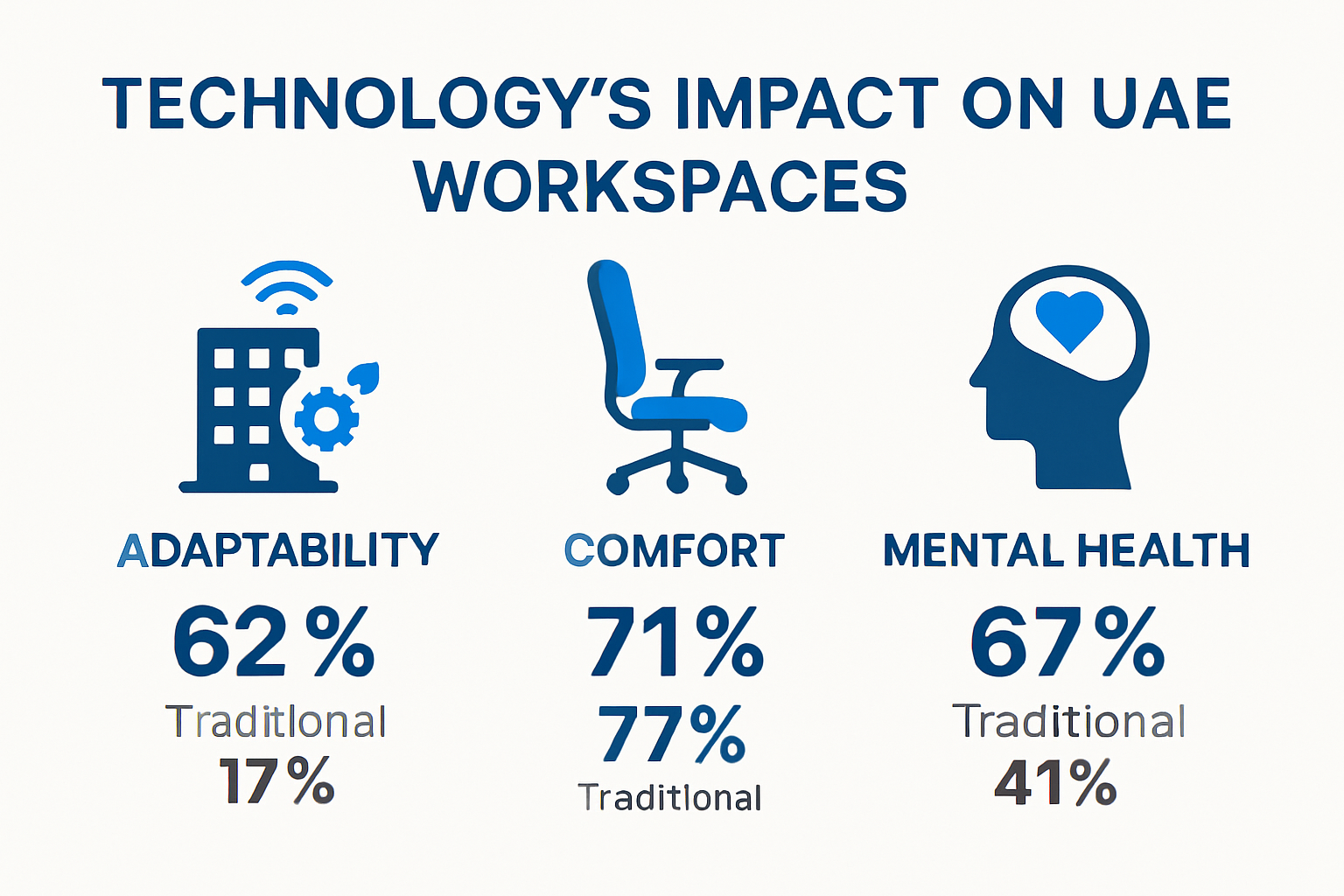
As the UAE continues to position itself as a global leader in technological innovation, the role of technology in workplace health and productivity becomes increasingly critical. The future of work is not about replacing human capabilities but about creating intelligent environments that amplify human potential. By leveraging advanced technologies, organizations can create workspaces that are not just productive, but truly supportive of holistic employee well-being.
Frequently Asked Questions
What are the main benefits of adaptive lighting and control systems in UAE offices?
Adaptive lighting and control systems enhance employee comfort and increase organizational adaptability by up to 47%. They allow for real-time adjustments to the office environment, promoting a healthier and more responsive workspace.
How does smart technology support remote collaboration in office design?
Smart technology like cloud-based collaboration tools enables seamless communication and teamwork regardless of location. This technology fosters increased organizational adaptability and allows businesses to tap into global talent.
What role does ergonomic furniture play in modern office design?
Ergonomic furniture reduces the risk of musculoskeletal disorders by providing posture support and adaptability. Features like height-adjustability and integrated health monitoring contribute to employee comfort and productivity.
How can environmental intelligence systems improve workplace comfort?
Environmental intelligence systems utilize sensors and IoT devices to monitor and adjust workspace conditions in real time, optimizing factors such as temperature, air quality, and lighting to enhance overall employee comfort.
Redefine Your UAE Workspace with Smart Design Technology
Is your office still stuck in the past while others move forward with adaptable lighting, intelligent furniture, and responsive comfort systems? The article highlights how UAE businesses see up to 47 percent higher adaptability and remarkable improvements in employee well-being with smart office technology. Now it is time to experience these proven benefits firsthand. Explore our customizable office furniture and interactive systems at SAGTCO. We help you create workspaces that respond to your team’s real needs instead of ignoring them.
Do not wait while others transform their spaces into productivity hubs. Connect with the experts at SAGTCO.com for a free space planning consultation. Discover how easy it is to upgrade your office with solutions tailored to the unique needs of modern UAE businesses. Take your next step today and see why so many organizations trust SAGTCO to deliver future-ready office environments.
Recommended
- Modern Office Design DUBAI: Inspiring Workspace Trends – Office Furniture Dubai | Buy Modern Office Furniture Dubai – SAGTCO
- Latest Innovations in Office Furniture: Trends for 2025 – Office Furniture Dubai | Buy Modern Office Furniture Dubai – SAGTCO
- 2025 Trending Office Interior Styles: A Complete Guide – Office Furniture Dubai | Buy Modern Office Furniture Dubai – SAGTCO
- Office Furniture Stores in Dubai: Transform Your Workspace Today
- Office Furniture for Wellbeing: Smart Choices for 2025 – Bum Seating


